As national governments struggle to keep pace , the world’s biggest cities are forging their own alliances on climate, finance and innovation, turning mayors into unexpected global power brokers, writes Arthur Sterling
For centuries diplomacy was the preserve of national governments. Treaties were negotiated in foreign ministries and decisions about trade, migration and climate were taken in national capitals. Yet the twenty first century has begun to shift that balance. Increasingly the world’s most decisive policy experiments are emerging not from nation states -but from cities.
The shift reflects a deeper transformation in the global economy. According to the United Nations Department of Economic and Social Affairs, more than 55 per cent of the world’s population already lives in urban areas, a share expected to reach nearly 70 per cent by 2050. Cities also dominate the global economy.
Research by the Brookings Institution shows that the world’s largest metropolitan areas generate a disproportionate share of global economic output and innovation.
Urban centres also dominate the environmental challenge. The UN estimates that cities account for roughly 70 per cent of global carbon emissions and a similar share of global energy consumption. Because transport, buildings and waste management are largely governed locally, many of the most important climate policies are implemented at the city level.
This reality has pushed mayors and municipal governments into a role that increasingly resembles diplomacy. Cities now coordinate international climate action, compete globally for investment and talent and raise finance through global capital markets. The phenomenon is sometimes described as decentralised diplomacy, a system in which metropolitan regions act as global policy actors alongside national governments.
Global city networks driving climate action
Perhaps the most powerful symbol of this shift is the C40 Cities Climate Leadership Group — a coalition of nearly one hundred major metropolitan areas working together on climate policy.
The network was launched in 2005 when London’s then mayor Ken Livingstone brought together leaders of large cities to coordinate urban climate action. Today the organisation includes cities representing more than 700 million residents and about a quarter of the global economy.
The premise is simple. Cities share policy frameworks, exchange data and replicate successful solutions. Instead of waiting years for international treaties, mayors can move quickly and implement policies directly.
Research from C40 shows that more than seventy per cent of its member cities have already reached peak greenhouse gas emissions, meaning emissions have begun to decline even while urban populations and economies continue to grow.
For climate advocates this represents one of the most promising developments in global governance. UN Secretary General Antonio Guterres has repeatedly stressed the central role of cities in tackling climate change, telling a gathering of mayors that “cities are where the climate battle will largely be won or lost.”
The momentum behind urban cooperation has become visible at international summits as well. At recent United Nations climate conferences, city networks have played an increasingly prominent role in shaping climate commitments and demonstrating how policies can be implemented on the ground.
The mayor president
As cities gain influence, their leaders are also gaining global visibility. Mayors of major cities now speak at international summits, negotiate economic partnerships and promote climate policies that reach far beyond their municipal boundaries.
London’s mayor Sadiq Khan has argued that urban leadership is essential to tackling global challenges. Speaking at UN Climate Ambition Summit, he said that “cities are leading the way in taking bold climate action and showing that environmental responsibility and economic growth can go hand in hand.”
In New York, its former mayor Eric Adams similarly framed urban policy as a global responsibility, telling climate forums that cities must work together to address environmental and economic challenges that transcend borders.
The growing stature of mayors reflects the policy areas they control. Urban governments regulate public transport systems, building standards, housing development and waste management. Each of these sectors plays a central role in climate mitigation.
C40 estimates that coordinated urban policies in buildings, transport and waste could reduce emissions dramatically while preventing hundreds of thousands of premature deaths linked to air pollution. Such policies also generate economic benefits by reducing energy costs and stimulating investment in new technologies.
In practical terms this has transformed mayors into figures who resemble national leaders. Many analysts now describe them as “mayor presidents”, local leaders whose decisions have global consequences.
Cities competing for talent and innovation
The rise of city diplomacy is not limited to climate policy. It is also reshaping economic competition.
Global cities increasingly compete directly with each other for talent, investment and technological innovation. Economic growth in advanced industries tends to cluster around metropolitan ecosystems where universities, venture capital and skilled workers are concentrated.
Cities have responded by designing policies aimed at attracting entrepreneurs and skilled migrants. Dubai introduced long term residency and so-called golden visa programmes that allow investors, scientists and technology entrepreneurs to live and work in the emirate for extended periods. The policy has helped reinforce Dubai’s role as a regional technology and finance hub.
Singapore has pursued a similar strategy, building an innovation driven economy centred on research institutions, financial services and digital infrastructure. Its city state governance model has allowed it to align immigration, economic policy and urban planning with remarkable precision.
Meanwhile cities such as London and Sydney have invested heavily in technology districts and startup ecosystems in order to compete in the global innovation economy.
The competition reflects a simple economic reality. Many economists argue that metropolitan regions rather than countries are now the true engines of global growth. Cities generate innovation, attract skilled labour and host the corporate headquarters that shape international commerce.
Financing the urban future
Another dimension of decentralised diplomacy lies in finance. Large cities increasingly raise capital independently through municipal bonds and green finance initiatives.
Climate adaptation and sustainable infrastructure require enormous investment. Rising sea levels, extreme weather and population growth are placing unprecedented strain on urban systems.
Cities have responded by tapping global capital markets. Municipal governments around the world now issue green bonds to finance renewable energy systems, flood defences and low carbon transport networks.
The financial centre of London has emerged as one of the world’s leading hubs for green finance, helping cities and institutions raise capital for climate related investments.
In the United States, Miami has issued resilience bonds to fund infrastructure designed to protect the city from rising sea levels and extreme weather. Similar financing models are being explored by coastal cities around the world.
Urban financing initiatives demonstrate how cities are increasingly bypassing national constraints. Instead of waiting for central governments to approve spending, metropolitan authorities can mobilise private capital directly.
Case studies shaping city state era
Several cities illustrate how this new model of urban power is unfolding.
First, Paris has implemented one of the most ambitious urban climate agendas in Europe, introducing car free zones, expanding cycling infrastructure and pushing forward a broader strategy to reduce emissions across the metropolitan region.
London has pursued a similarly ambitious approach. The city has expanded low-traffic neighbourhoods, pedestrianised streets and introduced one of the world’s largest urban clean-air programmes through the Ultra Low Emission Zone, which was progressively expanded to cover all London boroughs in 2023.
The policy imposes charges on the most polluting vehicles entering the capital, encouraging a shift toward cleaner transport. City authorities have also prioritised walking and cycling infrastructure, building hundreds of kilometres of cycle routes while restricting vehicle access in key districts.
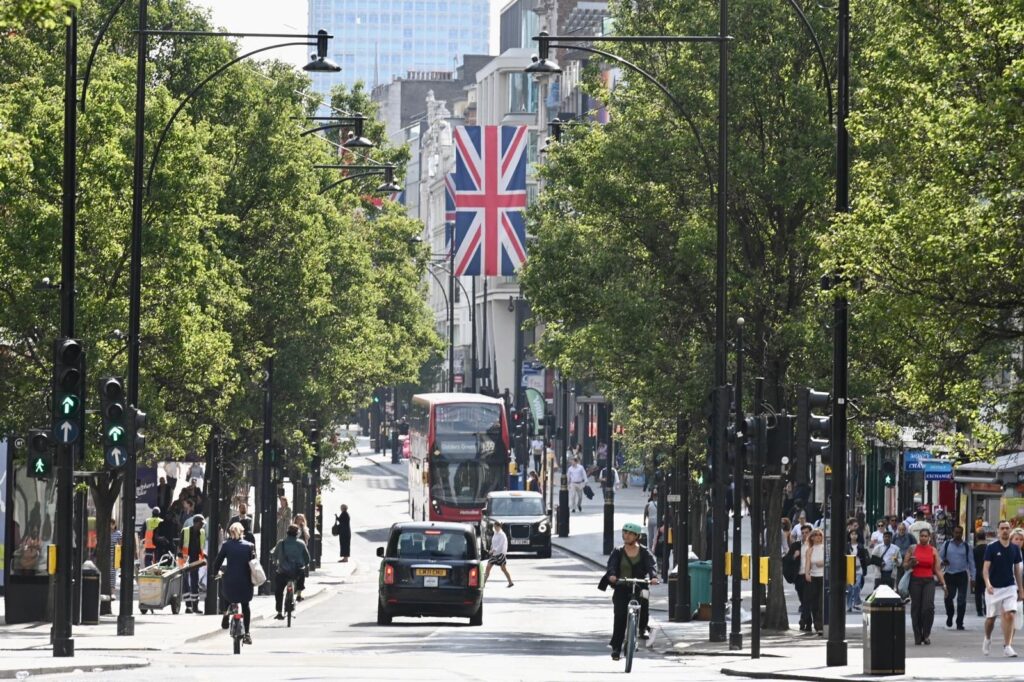
The transformation is most visible in central London, where the city is moving to pedestrianise sections of Oxford Street, one of Europe’s busiest retail corridors, as part of a wider effort to cut traffic, improve air quality and reshape the capital’s public spaces for people rather than cars.
Copenhagen has become a global benchmark for sustainable urban design, with extensive cycling networks, renewable energy integration and plans to become one of the world’s first carbon neutral capitals.
In the developing world, Lagos illustrates the scale of urban transformation underway. One of the fastest growing cities on the planet, Lagos is projected to become a megacity with enormous economic and demographic influence across Africa.
Urban governance in Lagos increasingly focuses on infrastructure, transportation and economic development strategies that mirror those of national governments.
These examples highlight a broader trend. Cities are becoming the operational centres of globalisation. They attract investment, concentrate talent and serve as laboratories where policy solutions are tested and refined.